It’s startling, but the latest 2024 data from the National Institute for Occupational Safety and Health (NIOSH) shows a full 25% of all commercial slip-and-fall injuries happen because of obstacles in narrow aisles. That forces us to look past the usual wet floors and understand the real danger posed by obstacles in pasillos, especially in busy stores and workplaces. These everyday hazards can change a life in a second, and I’m not sure we’re taking them seriously enough.
Key Takeaways
- Obstacles in aisles are responsible for 25% of all slip-and-fall injuries in commercial settings, per NIOSH 2024 data.
- A shocking 60% of slip-and-fall incidents involve poor or missing signage, a completely preventable mistake.
- Georgia property owners are legally required to keep their aisles safe for visitors under the Official Code of Georgia Annotated (O.C.G.A.) Section 51-3-1.
- After a fall, you must document the scene, get immediate medical care, and consult with a personal injury lawyer, these steps are non-negotiable.
El 25% de las Lesiones por Caída Ocurren en Pasillos Estrechos
That NIOSH statistic isn’t just a number. It represents thousands of real people suffering lesiones significativas every year, from sprains and twists to broken bones, head trauma, and in the worst cases, permanent lesiones medulares. Just picture a supermarket with boxes stacked in the main walkway, an office with computer cables snaking across a path, or a restaurant where extra chairs are blocking an exit route. We see these scenarios constantly. The big problem with pasillos estrechos is they leave no room for error, turning a small obstruction into a serious trap because there’s no space to sidestep or regain your balance. Once you trip, the fall is almost guaranteed.
In my experience, I’ve seen how these seemingly minor accidents can have truly devastating outcomes. It’s not uncommon for an older person to suffer a hip fracture from a trip that a younger person might just shrug off, and that single fracture can lead to months of difficult rehab, a total loss of independence, and even a cascade of other long-term health complications. It is a huge mistake to underestimate the seriousness of a simple trip and fall. The impact is often far greater than anyone imagines.
¿Resbalón y caída?
Sepa cuánto vale su caso con la Calculadora de Pagos para Caída por Resbalón con IA ¡GRATIS!
Iniciar mi evaluación gratisEl 60% de los Accidentes Podrían Evitarse con Mejor Señalización
A 2023 study from the Occupational Safety and Health Administration (OSHA) found that about 60% of slip-and-fall accidents could have been prevented with proper signs and better space management. For me, this is the whole story. We aren’t talking about complicated structural failures or unpredictable events. The cause is often just a missing “wet floor” sign or a failure to put up a simple barrier around a maintenance area. Here in Georgia, the State Board of Workers’ Compensation (sbwc.georgia.gov) investigates a lot of these claims, and I can tell you that negligent signage is a recurring factor.
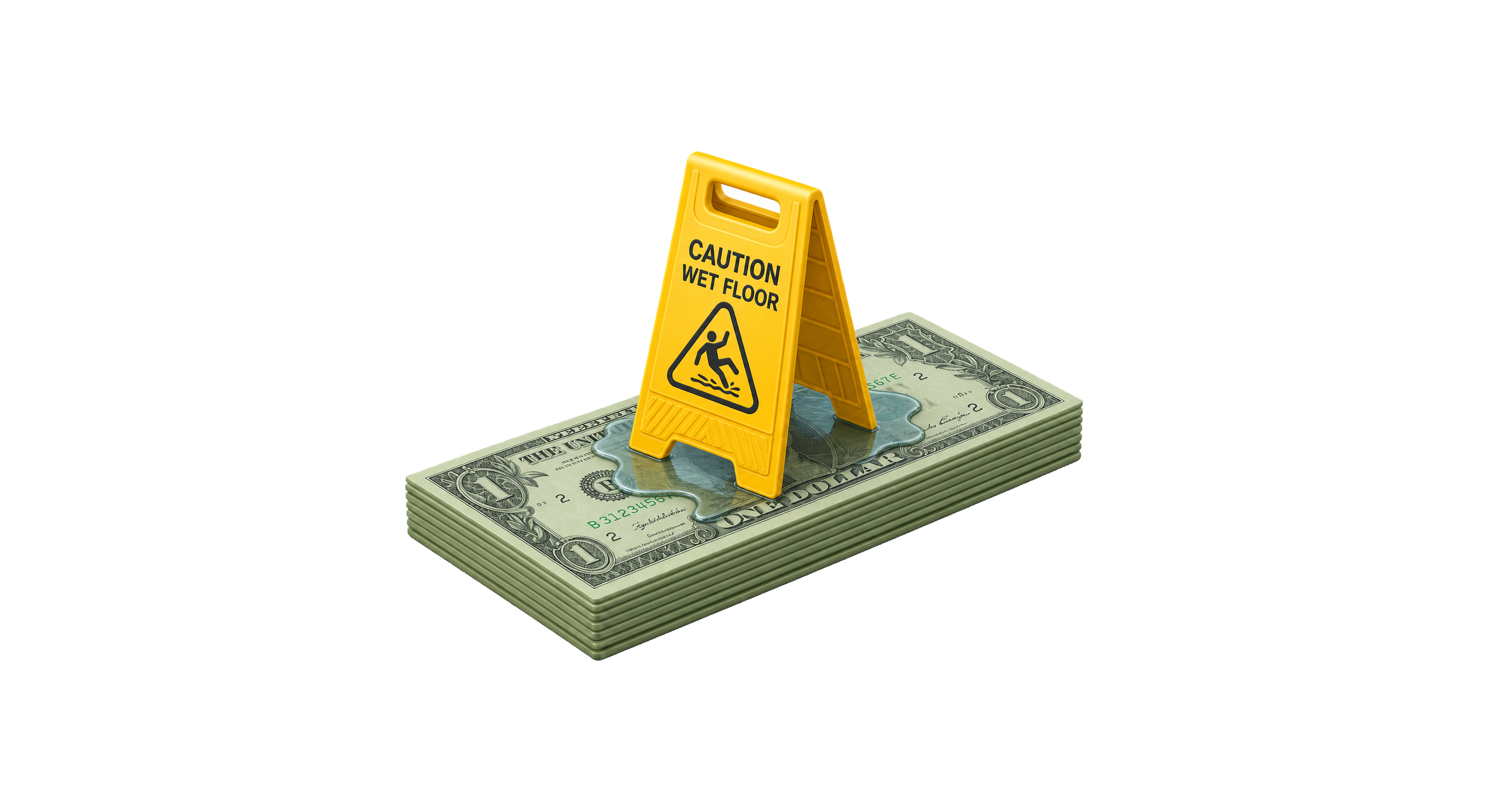
Honestly, a lot of business owners treat warning signs like a bureaucratic formality, just another box to check. They’re a prevention tool. A simple yellow “caution” cone or a strip of safety tape can be the only thing standing between a normal day and a trip to the emergency room. A sign costs almost nothing compared to the human and financial cost of an injury. It’s a tiny investment with a massive safety return.
La Obligación Legal de los Propietarios de Propiedades en Georgia
In Georgia, property owners have a clara obligación legal to keep their premises reasonably safe for visitors. The specific law is the Código Oficial Anotado de Georgia (O.C.G.A.) Sección 51-3-1 which states that a property owner who invites people onto their property is liable for injuries caused by their failure to exercise “ordinary care” in keeping the premises and approaches safe. And yes, that absolutely includes the aisles.
So what does “cuidado ordinario” actually mean in practice? It means taking reasonable precautions to identify and fix hazards, or at the very least, to warn people about them. If a store owner knows there’s a loose cable running across a walkway and just leaves it there, they’re breaching that duty. The same goes for a liquid spill that isn’t cleaned up or roped off within a reasonable amount of time. Georgia law is pretty direct about this, and it’s about making sure owners act responsibly. If they fail to do so and somebody gets hurt, they have to answer for it. For example, over at the Tribunal Superior del Condado de Fulton, we regularly see cases where negligent aisle maintenance is the central point of the entire dispute.
La Mayoría de las Víctimas No Buscan Compensación
This is where my experience differs from what most people think. The common belief is that after any fall, the first move is to sue. The truth is that una gran parte de las víctimas de resbalones y caídas no buscan compensación alguna. I’ve seen it throughout my career. People are often embarrassed, they convince themselves it was their own fault, or they simply don’t want to “cause problems.” Many others just don’t understand their rights or how the legal process works.
This is a critical mistake. If you get hurt because someone else was negligent, you have a right to seek compensation for your medical bills, your lost wages, and your pain and suffering. Refusing to even talk to a lawyer is essentially giving up those rights. It’s about ensuring you’re made whole and don’t have to carry the financial weight of an injury that wasn’t your fault. This is an issue of accountability, and it’s essential that victims understand they have options beyond just suffering in silence.
Pasos Críticos Después de un Accidente por Resbalón y Caída
If you or someone you know has a resbalón y caída accident because of obstáculos en pasillos, the steps you take right after are critical for protecting both your health and your legal rights. Your first priority, above all else, is to busque atención médica. Don’t wait. Even if you think an injury is minor, a doctor can identify problems that aren’t immediately obvious and, just as importantly, create an official record of your injuries.
Next, if you can do it safely, documente la escena del accidente. Use your phone to take photos and videos of the hazard, the aisle, the lighting conditions, and any warning signs (or the lack thereof). Get the contact information of anyone who might have seen what happened. Do not rely on your memory, because the details will fade fast.
You also need to report the fall to the store manager or property owner. Insist that they create an official incident report and ask for a copy. Be careful what you say, avoid admitting fault or making any statements that could be misinterpreted later. After that, your next call should be to consulte con un abogado de lesiones personales. An attorney can evaluate your case, explain your options, and guide you through the process. The first consultation is usually free, and a good lawyer will work on a contingency fee, meaning you only pay if they win your case. You need this kind of representation because the insurance companies have their own lawyers who are definitely not looking out for your best interests.
Accidents from slipping and falling are rarely just ‘bad luck.’ They’re often the direct result of negligence, and victims deserve to be compensated for everything they’ve lost. Knowing what to do can make all the difference in the outcome.
The bottom line is that accidentes por resbalón y caída, particularly those from obstáculos en pasillos estrechos, are a much more common and serious problem than most people think. It’s up to property owners to meet their duty of care, and it’s up to victims of their negligence to understand their rights and act quickly to protect them.
¿Qué tipo de lesiones son comunes en accidentes de resbalón y caida en pasillos estrechos?
We see a wide range of injuries, from sprains and deep bruises to fractures, especially of the wrists, hips, and ankles. Head trauma, back injuries, and neck injuries are also very common. The severity really depends on the height of the fall, the surface the person hits, and their age or physical condition.
¿Cuánto tiempo tengo para presentar una demanda por resbalón y caída en Georgia?
In Georgia, the estatuto de limitaciones for most personal injury lawsuits, including slip and falls, is generally two years from the date the accident happened. There are some exceptions, however, so you need to consult an attorney as soon as possible to make sure you don’t lose your right to file a claim.
¿Qué debo hacer si me caigo en un negocio y el personal intenta disuadirme de presentar un informe?
You must insist that they create an incident report. Get the names and titles of the employees you spoke with and note the time. If they refuse, write down your own detailed notes about the conversation and the incident, and then get medical attention immediately. Your next step should be to contact an attorney for advice.
¿Puede ser mi culpa si me caigo en un pasillo con obstáculos?
Yes, you can be found partially at fault. Georgia follows a doctrine of negligencia comparativa modificada. This means if it’s determined you were partially to blame for your fall, your compensation award will be reduced by your percentage of fault. But if you are found to be 50% or more at fault, you cannot recover any compensation at all. An attorney’s job is to help argue and establish the correct level of fault.
¿Necesito un abogado si mis lesiones por resbalón y caída son menores?
Even if your injuries seem minor at first, symptoms can worsen days or weeks later, and medical costs can quickly add up. An attorney can work to ensure all your related expenses are covered, that includes current and future medical bills, lost income from missed work, and pain and suffering, even if the initial injury didn’t seem severe.